Contents
Introduction
Understanding the Purpose of Wound Dressing Before Applying a Dressing Kit
Rule One: Maintain Strict Cleanliness and Sterility in Wound Dressing
Rule Two: Protect the Wound While Allowing Proper Healing Conditions
Rule Three: Use the Right Dressing Kit for the Right Type of Wound
Rule Four: Change Dressings at the Correct Frequency and Timing
Rule Five: Monitor the Wound and Respond to Changes Promptly
How the 5 Rules Work Together in Clinical, Home, and Emergency Settings
Conclusion
FAQ
Introduction
Proper wound dressing is a foundational skill in medical care, post-operative recovery, emergency response, and daily home health management. Whether the setting is a hospital, clinic, or household, following structured wound dressing principles significantly reduces infection risk, promotes faster healing, and improves patient comfort. A well-organized Dressing Kit plays a central role in supporting these principles by providing sterile, purpose-specific tools that guide correct technique. Understanding and applying the five essential rules of wound dressing ensures that every step—from cleaning to monitoring—supports optimal healing outcomes across Medical, Home Care Wound, and Emergency First Aid environments.
Understanding the Purpose of Wound Dressing Before Applying a Dressing Kit
Before exploring the five rules themselves, it is essential to understand why wound dressing exists as a medical practice. Wound dressing is not merely about covering an injury; it is a controlled process designed to protect tissue, manage moisture, prevent contamination, and support natural healing. A properly selected Dressing Kit provides the materials required to meet these objectives without improvisation or unnecessary exposure.
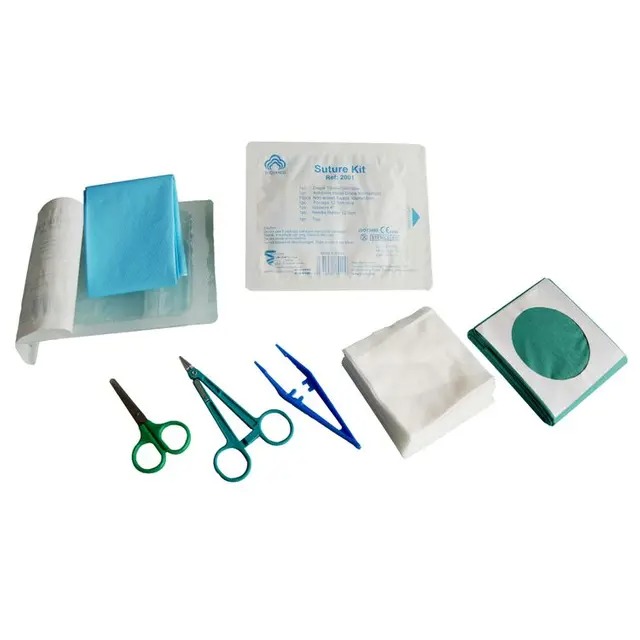
At its core, wound dressing serves four purposes: protection, absorption, stabilization, and observation. Each component inside a Surgical Dressing Kit or Sterile Disposable Dressing Kit—such as gauze, pads, bandages, and gloves—has a defined role within this process. When these tools are used without a clear understanding of the wound’s condition, even high-quality materials may fail to deliver effective results.
Different environments place different demands on wound care. In for Clinics or hospital settings, infection control standards are strict, and dressing protocols are standardized. In Home Care Wound situations, ease of use and safety become priorities. In Emergency First Aid, speed and protection may outweigh long-term dressing solutions. The five rules of wound dressing act as a universal framework that adapts to all these settings, ensuring that a Medical Dressing Kit is used correctly regardless of context.
Rule One: Maintain Strict Cleanliness and Sterility in Wound Dressing
The first and most critical rule of wound dressing is maintaining cleanliness and sterility throughout the entire process. Infection remains the primary complication in wound management, and improper handling can introduce bacteria even into minor injuries. A Sterile Disposable Dressing Kit is designed to minimize this risk, but only if used correctly.
Cleanliness begins before the wound is touched. Hands must be thoroughly washed or sanitized, and sterile gloves from the Dressing Kit should be worn whenever possible. All instruments, gauze, and dressings must remain uncontaminated until application. Touching sterile materials with bare hands or placing them on unclean surfaces immediately compromises their purpose.
Sterility is especially crucial in for Post-Op Care and Surgical Dressing Kit applications, where wounds are deeper and healing tissue is highly vulnerable. Even in Home Care Wound scenarios, maintaining a clean field reduces healing time and prevents complications that could escalate into clinical interventions.
Rule one establishes the foundation for all other rules. Without strict cleanliness, no dressing—regardless of quality—can protect a wound effectively. A well-organized Medical Dressing Kit supports this rule by separating sterile and non-sterile items and reducing handling errors.
Rule Two: Protect the Wound While Allowing Proper Healing Conditions
The second rule focuses on balancing protection with the wound’s physiological needs. A wound must be shielded from external threats such as dirt, friction, and bacteria, but it also requires adequate airflow, moisture balance, and temperature stability to heal properly. Choosing the correct components from a Dressing Kit ensures this balance is maintained.
Overly tight or overly absorbent dressings can restrict circulation or dry out the wound bed, slowing healing. Conversely, insufficient coverage may expose the wound to contaminants. Modern Medical Dressing Kits are designed to provide layered protection—typically using a primary dressing to manage moisture and a secondary dressing to secure and protect.
This rule is particularly relevant in for Clinics and Surgical environments, where improper dressing selection can lead to maceration or delayed closure. In Emergency First Aid, temporary protection using a basic Dressing Kit helps stabilize the wound until advanced care is available.
Protecting the wound does not mean sealing it completely. The goal is controlled protection, and understanding this principle allows caregivers to select and apply dressings that support healing rather than interfere with it.
Rule Three: Use the Right Dressing Kit for the Right Type of Wound
Not all wounds are the same, and this reality forms the basis of the third rule. Abrasions, lacerations, surgical incisions, burns, and puncture wounds each require different dressing strategies. Using a generic approach or an inappropriate Dressing Kit can compromise outcomes.
A Surgical Dressing Kit is structured for clean incisions and controlled environments, while a Home Care Wound Dressing Kit emphasizes ease of use and comfort. Emergency First Aid Dressing Kits prioritize rapid application and bleeding control. Selecting the right kit ensures that materials align with wound depth, drainage level, and risk of infection.
The table below illustrates how different wound types align with specific dressing kit considerations:
| Wound Type | Recommended Dressing Kit Type | Key Focus |
| Surgical incision | Surgical Dressing Kit | Sterility, secure closure |
| Minor cuts & abrasions | Home Care Wound Dressing Kit | Protection, comfort |
| Trauma or bleeding | Emergency First Aid Dressing Kit | Rapid absorption, pressure |
| Post-operative wounds | for Post-Op Care Dressing Kit | Infection prevention |
| Clinical wound care | Medical Dressing Kit for Clinics | Standardized protocols |
This rule emphasizes decision-making rather than technique. A well-stocked Dressing Kit only delivers value when matched appropriately to the wound it is intended to treat.
Rule Four: Change Dressings at the Correct Frequency and Timing
The fourth rule addresses one of the most commonly misunderstood aspects of wound care: dressing changes. Changing a dressing too frequently can disturb healing tissue, while leaving it in place for too long can trap moisture and bacteria. A properly used Dressing Kit supports scheduled, hygienic dressing changes.
The frequency of changes depends on wound type, drainage level, and care setting. for Post-Op Care, dressings may be changed less frequently under professional guidance. In Home Care Wound situations, daily inspection and periodic changes are common. Emergency First Aid dressings may require replacement once bleeding is controlled and conditions stabilize.
Each dressing change should follow the same sterility principles as the initial application. This consistency is why Sterile Disposable Dressing Kits are particularly effective—they reduce cross-contamination between changes.
Rule four reinforces that wound dressing is an ongoing process, not a single action. A reliable Medical Dressing Kit ensures continuity of care from initial treatment through full healing.
Rule Five: Monitor the Wound and Respond to Changes Promptly
The final rule recognizes that wounds are dynamic. Healing does not follow a fixed timeline, and continuous observation is essential. A Dressing Kit facilitates monitoring by allowing safe access to the wound without introducing contamination.
Signs such as increased redness, swelling, unusual discharge, or odor indicate potential complications. In for Clinics and Medical environments, documentation and escalation protocols guide responses. In Home Care Wound settings, early recognition and timely consultation can prevent serious outcomes.
Monitoring also includes assessing patient comfort and dressing integrity. A dressing that shifts, loosens, or becomes saturated must be addressed promptly. Emergency First Aid scenarios especially rely on reassessment as conditions evolve.
This rule ties together all previous principles. Clean application, proper protection, correct kit selection, and appropriate timing only achieve their purpose when paired with active observation and responsive care.
How the 5 Rules Work Together in Clinical, Home, and Emergency Settings
The five rules of wound dressing are not isolated instructions; they function as an integrated system. A Dressing Kit acts as the physical toolset that enables these rules to be applied consistently across environments. In Medical and for Clinics contexts, protocols formalize these rules. In Home Care Wound situations, they provide structure and confidence. In Emergency First Aid, they offer clarity under pressure.
When applied together, the rules reduce infection rates, improve healing efficiency, and enhance patient outcomes. They also simplify training and standardization, ensuring that caregivers at all levels can deliver safe and effective wound care using the appropriate Dressing Kit.
Conclusion
Understanding what the five rules of wound dressing are—and how to apply them correctly—transforms wound care from a routine task into a structured healing strategy. Cleanliness, protection, appropriate kit selection, timely dressing changes, and continuous monitoring form a complete framework supported by a well-designed Dressing Kit. Whether in Surgical, Medical, Home Care Wound, or Emergency First Aid settings, these principles ensure wounds are treated safely, consistently, and effectively, leading to better healing outcomes and reduced complications.
FAQ
1.What is the most important rule of wound dressing?
Maintaining cleanliness and sterility is the most critical rule, as infection prevention underpins all successful wound care.
2.Can one Dressing Kit be used for all wound types?
No. Different wounds require different materials. Using the right Dressing Kit for each wound type ensures proper protection and healing.
3.How often should dressings be changed?
The frequency depends on wound type, drainage, and care setting. Following medical guidance and monitoring the wound is essential.
4.Why are sterile disposable dressing kits recommended?
They reduce contamination risk, simplify dressing changes, and support consistent hygiene across care environments.
5.Are the five rules applicable to home care?
Yes. The five rules are universal and especially valuable in Home Care Wound management, where professional supervision may be limited.


